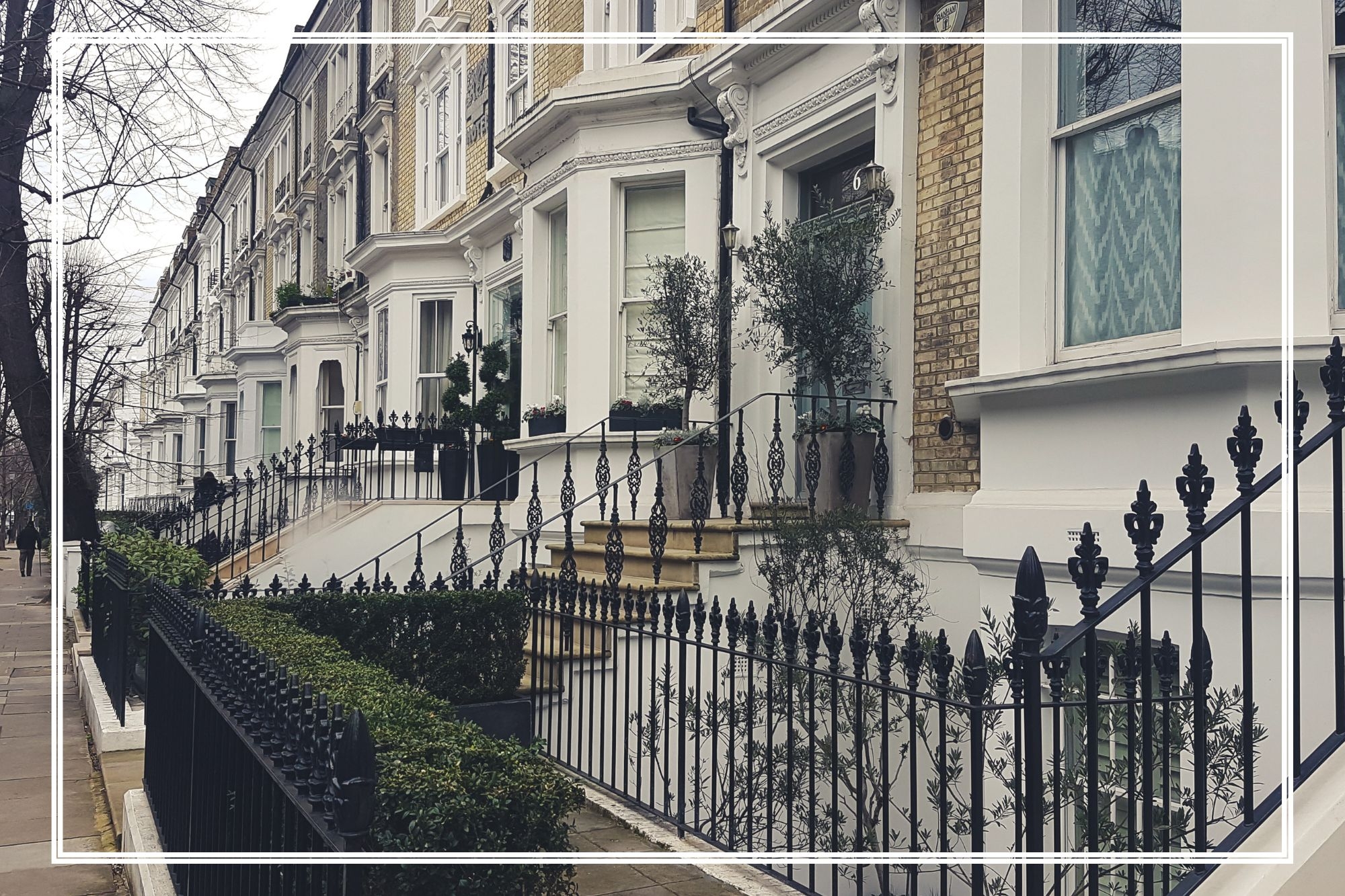
The London property market has always operated by its own rules, but the conditions in spring 2026 are distinct even by the capital's standards. According to Zoopla's April 2026 House Price Index, there is significantly more stock available in London than a year ago, homes are taking an average of six days longer to sell than at the same point in 2025, and house prices across London and the South East are sitting at minus 0.2% year-on-year. For sellers in the capital, these figures matter and understanding them clearly is the starting point for responding effectively.
Why London is underperforming the national picture
Nationally, the housing market is proving resilient. Zoopla's April data shows UK house price inflation holding steady at 1.3%, sales agreed running just 3% behind last year, and buyer demand rebounding strongly after Easter to its highest level since the Iran conflict began at the end of February. In the North, prices are growing at 3.1% in the North West and 3.2% in the North East. Cities like Burnley, Rochdale, and Liverpool are recording annual growth above 4%.
London is telling a different story. The same elevated mortgage rates that are being absorbed relatively comfortably in more affordable northern markets are felt significantly more keenly in the capital, where purchase prices are higher, deposits are larger, and the impact of stamp duty falls more heavily on buyers. Zoopla's data shows that four in five first-time buyers in London pay stamp duty equivalent to 3% of their purchase price, compared to fewer than one in ten elsewhere in the country. That additional financial burden on the buyers who make up a large proportion of outer London demand is directly lengthening selling times and constraining prices.
Where the pressure is most visible
The slower market in London is not evenly distributed. Zoopla's analysis is clear that the impact is concentrated in outer London boroughs where first-time buyers are most prevalent and most sensitive to borrowing costs. Harrow now has an average selling time of 54 days, compared to 33 days a year ago, an increase of 65%. South East London is up 34% to 43 days. East London is up 29% to 36 days. Uxbridge and Bromley have both seen selling times extend by around seven days.
The same pattern extends into the commuter belt, where Dartford is up 28% to 37 days and Slough up 18% to 46 days. For sellers in these areas in particular, the market dynamic has shifted materially since the same time last year, and pricing and presentation decisions need to reflect that reality rather than last year's conditions.
In central and prime London, the picture is less pressured. Buyers in these markets tend to be wealthier, more equity-rich, and less dependent on high loan-to-value mortgage products. The six-day average increase in selling time across all of London disguises a meaningful variation between inner and outer areas.
What your competitive edge actually looks like
In a market where buyers have more choice than they did a year ago, the properties that find buyers quickly are not necessarily the ones with the nicest kitchens or the best location. They are the ones that are priced correctly from the outset and presented to the highest possible standard. Zoopla's April HPI is direct on this point: well-priced homes are still selling in the same time as last year. It is overpriced homes that are driving the averages upward and contributing to the stock build.
Pricing correctly in the current London market means using recent sold prices as the benchmark, not asking prices and not what a similar property achieved in 2024 or early 2025. Supply is elevated, buyer budgets are constrained by higher mortgage rates, and the negotiating dynamic has shifted. A realistic, evidence-based asking price is not a concession. It is the mechanism by which your home reaches the buyers who are actually in the market and capable of proceeding.
Presentation matters more in a competitive market than in a supply-constrained one. When buyers have alternatives, the properties that convert viewings to offers are those that require the least imagination. Well-maintained, decluttered, and professionally photographed homes consistently outperform those that leave buyers doing the mental work of seeing past condition or clutter.
The broader outlook
Zoopla expects buyer demand to continue recovering in the coming months. Mortgage rates have begun to edge lower following the initial shock of the Iran conflict, and lenders are competing for business again. The conditions that made the first quarter of 2026 difficult for London sellers are not expected to worsen significantly, but they are also unlikely to reverse quickly. Sellers who wait for the market to recover before addressing pricing and presentation are likely to find the wait longer than they expect. Those who adapt to current conditions are the ones finding buyers.
Talk to us about how to position your home in the current market
